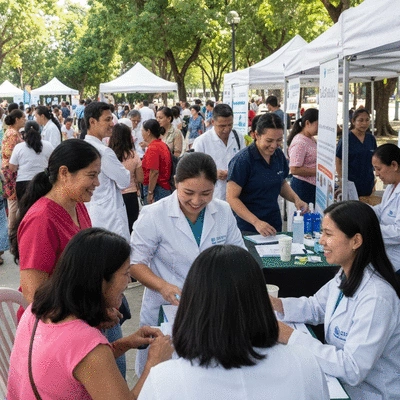
As we navigate the complex terrain of healthcare, the commitment to health equity emerges as a crucial pillar for a just society. The National Medical Association (NMA) has dedicated itself to championing this cause by addressing the unique health challenges faced by African American communities. Specifically, promoting health equity in rural areas is a key focus to ensure all populations have access to necessary care, as highlighted in a recent report on Advancing Rural Health. Here are the key takeaways from their mission and efforts:
What You Will Learn
The NMA advocates for health equity, aiming to empower African American physicians and improve health outcomes for communities of color.
Understanding health equity involves addressing social determinants that disproportionately affect minority populations.
Education tailored to diverse populations is vital for promoting health literacy and improving healthcare access.
Collaboration with community organizations is essential for effective advocacy and systemic change in healthcare.
Continuous evaluation of health outcomes helps refine strategies and enhances the effectiveness of advocacy efforts.
NMA's Health Equity Initiatives & Impact
The National Medical Association (NMA) focuses on key areas to advance health equity and address disparities, utilizing strategic approaches and a clear long-term vision.
Health Equity Definition & Disparities
Everyone has a fair and just opportunity to achieve their highest level of health. Disparities are due to socioeconomic factors, race, ethnicity, and geography, disproportionately affecting communities of color.
Key Takeaways: Advocacy Initiatives
✓ Collaboration is Key (partnerships)
✓ Education Empowers (culturally competent)
✓ Data-Driven Approaches (research & data)
Long-term Vision for Health Equity
✓ Increased Access (eliminate barriers)
✓ Diverse Healthcare Workforce (train & retain)
✓ Community Empowerment (local leaders)
Evaluating Health Outcomes for Advocacy
✓ Collecting Data (quantitative & qualitative)
✓ Community Feedback (experiences & needs)
✓ Adjusting Strategies (refine approaches)
Understanding the National Medical Association's Commitment to Health Equity
In today's healthcare landscape, the National Medical Association (NMA) stands as a beacon of hope and advocacy for health equity. Since its inception in 1895, the NMA has remained dedicated to addressing the unique health challenges faced by African American communities. Our commitment at the Maryland State Chapter of the NMA is to empower physicians and advocate for policies that promote equitable health outcomes for all, particularly in underserved populations. Initiatives aimed at advancing racial equity in U.S. health care are crucial for comprehensive progress.
Through collaboration and advocacy, we amplify the calls for systemic change within healthcare, ensuring that the voices of Black physicians are heard. Our mission is centered around enhancing health outcomes and promoting culturally relevant health education, which are crucial for achieving health equity.
Introduction to the NMA and Its Mission
The NMA represents over 50,000 African American physicians who strive to advocate for the health needs of their patients. Our mission is clear: to promote health equity and social justice. By doing so, we aim to empower African American physicians and improve the health outcomes of communities of color throughout Maryland and beyond.
Advocacy for health equity
Enhancing health education tailored to diverse populations
Providing resources and support for African American physicians
Through initiatives and programs, we not only address immediate healthcare needs but also work to dismantle the systemic barriers that contribute to health disparities. This aligns with broader efforts to integrate health equity into medical education and training, as discussed in the AMA's Health Equity Integration into Medical Education report.
Defining Health Equity and Health Disparities
Health equity means that everyone has a fair and just opportunity to achieve their highest level of health. Unfortunately, many people experience health disparities due to socioeconomic factors, racial and ethnic backgrounds, and geographical limitations. At the Maryland State Chapter of the NMA, we recognize that these disparities disproportionately affect communities of color.
Understanding the root causes of these disparities is essential for crafting effective solutions. We emphasize that health equity is not just about access to care but also about addressing the social determinants of health that influence well-being.
Social Determinants of Health: Their Role in Health Equity
Social determinants of health encompass a variety of factors that impact health outcomes, including economic stability, education access, healthcare access, and neighborhood environments. These determinants play a critical role in shaping the health of individuals and communities.
Economic Stability: Income levels impact access to healthcare and healthy living conditions.
Education Access: Education influences health literacy and the ability to navigate the healthcare system.
Healthcare Access: Availability of services directly affects health outcomes and preventative care.
Neighborhood Environments: Safe and supportive environments contribute to healthier lifestyles.
By addressing these social determinants, we can work towards achieving true health equity for all Marylanders. Our strategies include community engagement and partnerships that focus on education and resource sharing, ensuring that everyone has the tools necessary to lead healthier lives.
Engage With Us!
We want to know your thoughts on health equity! What do you believe is the most significant barrier to achieving health equity in your community? Share your insights below:
Frequently Asked Questions About NMA and Health Equity
The NMA is dedicated to championing health equity, empowering African American physicians, and improving health outcomes for communities of color by addressing unique health challenges.
Health equity means that everyone has a fair and just opportunity to achieve their highest level of health, free from disparities caused by socioeconomic factors, race, ethnicity, or geography.
Social determinants of health, such as economic stability, education access, healthcare access, and neighborhood environments, significantly impact health outcomes and contribute to health disparities. Addressing them is key to achieving equity.
The NMA's long-term vision includes increasing healthcare access, fostering a diverse healthcare workforce, and empowering communities by engaging local leaders and advocates.
The NMA evaluates its advocacy efforts by collecting quantitative and qualitative data, gathering community feedback, and continuously adjusting strategies to refine approaches and enhance effectiveness.
Summarizing the Impact of NMA's Advocacy Efforts
At the Maryland State Chapter of the National Medical Association (NMA), we have seen firsthand the profound impact of our advocacy efforts on health equity. Through various initiatives aimed at underserved communities, we continuously work towards achieving significant improvements in health outcomes. By focusing on culturally relevant health education and supporting African American physicians, we strive to create a more equitable healthcare landscape.
As we reflect on our journey, there are several key takeaways regarding our health equity initiatives that stand out:
Collaboration is Key: Successful advocacy often involves partnerships with community organizations, healthcare providers, and local leaders.
Education Empowers: We prioritize culturally competent health education, which directly addresses the unique needs of communities of color.
Data-Driven Approaches: Our initiatives are supported by research and data that highlight the health disparities facing our communities.
These takeaways guide our ongoing efforts and inform our strategies as we continue to advocate for health equity.
Long-term Vision for Health Equity in Underserved Communities
As we look to the future, our long-term vision at the NMA is clear: we aim to foster a healthcare environment where every individual, regardless of their background, has access to quality care. This vision is not merely aspirational but grounded in actionable strategies and commitment. We recognize that achieving health equity requires systemic change, and we are dedicated to leading this charge.
Our vision encompasses several essential components:
Increased Access: Expanding healthcare access for communities of color by advocating for policies that eliminate barriers.
Diverse Healthcare Workforce: Supporting initiatives that train and retain a diverse group of healthcare professionals.
Community Empowerment: Engaging local leaders and advocates to ensure that health initiatives resonate with the populations they serve.
By focusing on these elements, we are paving the way for a healthier, more equitable future.
Evaluating Health Outcomes of Advocacy Efforts
To ensure that our advocacy efforts are effective, we place great emphasis on evaluating health outcomes. By measuring the impact of our initiatives, we can identify areas for improvement and celebrate successes. This evaluation process involves:
Collecting Data: We gather quantitative and qualitative data to assess the effectiveness of our programs.
Community Feedback: Engaging with community members to gain insights about their experiences and needs.
Adjusting Strategies: Using evaluation results to refine our approaches and enhance our advocacy efforts.
Through this continuous evaluation, we ensure that our mission to promote health equity remains dynamic and responsive to the evolving needs of underserved communities.
Recap of Key Points
Here is a quick recap of the important points discussed in the article:
The National Medical Association (NMA) is dedicated to advocating for health equity and enhancing health outcomes for African American communities.
Understanding health equity involves addressing the social determinants of health that disproportionately affect communities of color.
Collaboration with community organizations and healthcare providers is essential for successful advocacy efforts.
Culturally relevant health education empowers individuals and addresses the unique needs of diverse populations.
Ongoing evaluation of health outcomes is crucial to refine advocacy strategies and enhance effectiveness.
The Maryland State Chapter of the National Medical Association, is a group of dedicated physicians and advocates for health equity, specializing in the advancement of culturally relevant health education.
With many years of experience in both clinical practice and community outreach, Our physicians are passionate about empowering other African American physicians and enhancing the health outcomes of communities of color.
Their commitment to advocacy and leadership drives the mission of The Maryland State Chapter of the National Medical Association, where dedicated physicians work to amplify the voices of Black physicians nationwide.
The NMA is national professional and scientific organization that represents the interests of 50,000 african american physicians who are the leading advocates for their patients.
The NMA was founded in 1895 and is the oldest organization representing AA physicans and their patients and health care workers.
Current Maryland Leadership
President Stephen McKenna MD
Vice President Darryl Hill MD
Welcome to The Maryland State Chapter of the National Medical Association
The Maryland State Chapter of the NMA is dedicated to advocating for health equity and enhancing care in communities of color. We empower African American physicians with culturally relevant health education to drive systemic change and better health outcomes.